“Dining Alone Together” – Behind the Scenes of an Olafique Work
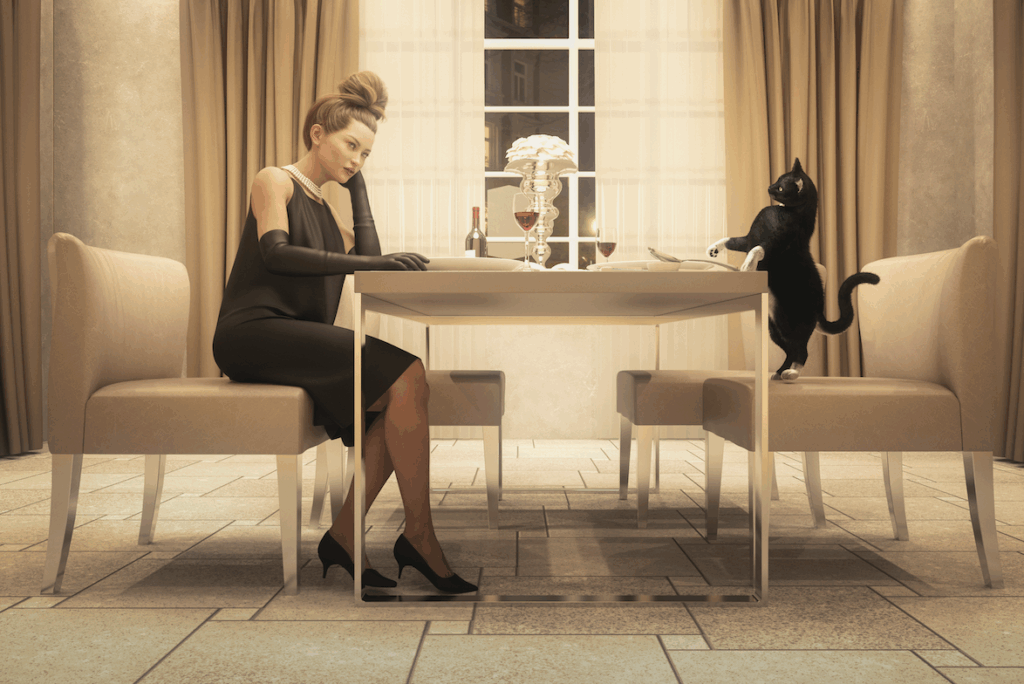
When I created Dining Alone Together, I wanted to explore the thin line between loneliness and togetherness — a theme that resonates strongly in my Olafique works, which are inspired by the narrative photography of Erwin Olaf. At first glance, the scene feels cinematic, frozen in a moment where silence and tension dominate the table. But behind this artwork lies a fascinating process that merges 3D creation with AI-powered transformation.
The Olafique Series
Olafique is my ongoing series of works that pay homage to Erwin Olaf while developing my own artistic voice. These pieces are staged, theatrical, and filled with subtle storytelling — often addressing themes like isolation, power dynamics, or social tension. What sets Olafique apart is the blend of cinematic atmosphere with painterly reinterpretation, balancing realism with abstraction. Dining Alone Together is a cornerstone in this series, perfectly embodying the mix of narrative intensity and experimental technique that defines Olafique.
Why I Created This Work
One of the series by Erwin Olaf that has touched me most deeply is Grief. They are still images, frozen moments in time, yet each tells an entire story without words. They evoke emotions in me as a viewer, making me pause and feel. That is what I admire: the ability of an image to go beyond its surface and create an inner dialogue.
With Dining Alone Together, I wanted to achieve something similar. My ultimate compliment as an artist would be if a viewer of my work also feels an emotion, builds their own story, and experiences that quiet tension in a way that resonates personally. This work is an attempt to capture that same fragile, cinematic silence.
Building the Scene in 3D
The foundation of Dining Alone Together was built in a 3D environment. Using digital models allowed me to carefully stage the composition, the lighting, and the subtle gestures between the characters. 3D tools give me the freedom to experiment endlessly with poses, angles, and atmospheres — almost like setting up a film set that exists only in pixels.
Once the scene felt right, I rendered it as a raw base image. While technically complete, I saw potential to take the mood further, pushing the textures, atmosphere, and painterly qualities beyond what 3D alone could provide.
Enter Magnific: Style Transformation
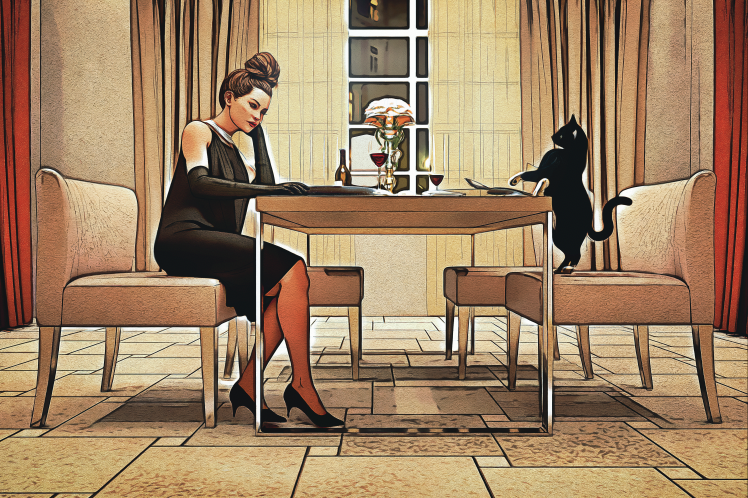
That’s where Magnific.ai came in. With Magnific’s AI-powered style transfer, I reworked the original render into a second version of Dining Alone Together. This process was not about replacing the creative vision but about amplifying it. Magnific allowed me to introduce painterly depth, richer textures, and a stylization that brought the story closer to the aesthetic I envisioned.
For this version, I was heavily inspired by Erwin Olaf’s iconic Grief series. Just like Olaf’s works, I wanted to capture that almost unbearable silence between people, where emotions are present but hidden under the surface. The AI transformation pushed the piece into a more melancholic, cinematic atmosphere — echoing the tension and restrained emotion that makes Grief so powerful.
If you’re curious about trying Magnific yourself, you can explore it here: Magnific.ai. It has become an essential part of my workflow whenever I want to merge technical precision with artistic unpredictability.
Three Versions, Three Interpretations
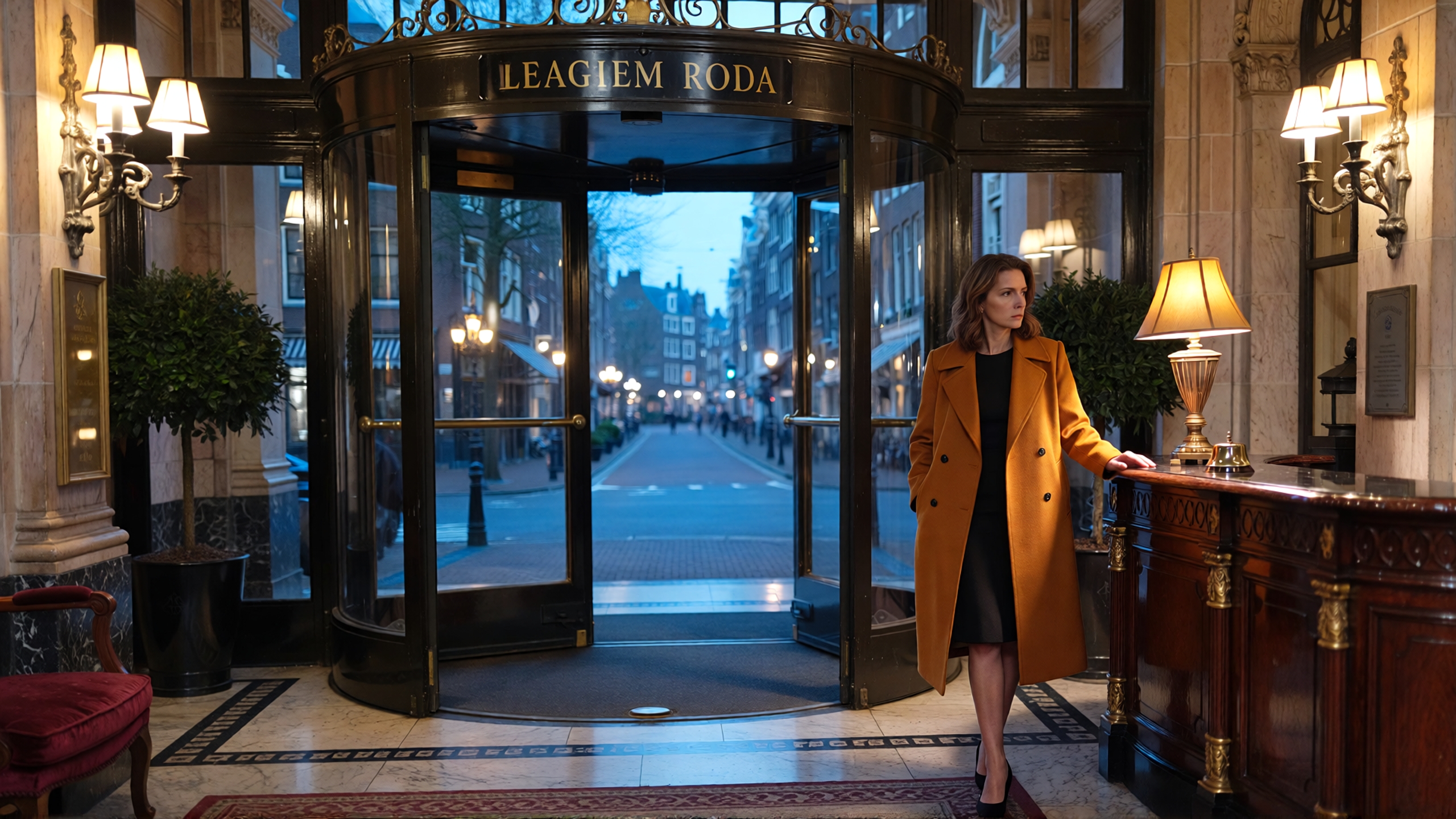
What fascinates me most about this work is that it evolved into three distinct versions:
The original 3D-based version, direct and cinematic, staged like a frozen film still.
Each version tells the same story — two people at a table, sharing space but not necessarily connection — but shifts the emotional weight depending on the technique.
Why 3D and AI Belong Together
For me, the combination of 3D rendering and AI is not about replacing creativity but expanding it. 3D gives me total control over structure and detail, while AI introduces texture, mood, and painterly qualities that surprise even me as the artist. It’s this synergy that makes works like Dining Alone Together possible — balancing narrative, technique, and emotion in new ways.
Smarter Rendering with AI Upscalers
Another advantage of today’s creative tools is that you don’t always need high-end hardware to produce large, detailed artworks. By rendering a 3D scene in a lower resolution, you can save time and system resources, and then use AI upscalers to bring it to full size. Tools like Topaz Gigapixel or, at a slightly higher cost, Magnific, can enhance these lower-resolution renders with impressive detail and artistic fidelity. This approach makes it possible for artists to focus on creativity rather than technical limitations — opening the door for anyone to combine 3D and AI in their own workflow.
Related
Discover more from Arjen Roos
Subscribe to get the latest posts sent to your email.