
BACKGROUND ARTICLE
My First Jigsaw Puzzle Sale
Last week I sold my first 1,000-piece jigsaw puzzle featuring one of my artworks via PX Puzzles. Here’s why puzzles are such a perfect…
Art, tutorials and visual experiments
BACKGROUND ARTICLE
Today I published a whitepaper on my website that proposes a practical framework for long-term proof of authorship for digital images—without needing to store image files on-chain or rely on fragile hosting links.
If you’ve been around NFTs for a while, you’ve probably seen the problem: the token may survive, but the referenced image can disappear when a marketplace shuts down, a gateway changes, or hosting quietly breaks. And even outside NFTs, the day-to-day reality is that images are shared as web exports: resized, recompressed, watermarked, and often stripped of EXIF/XMP metadata. A byte-exact hash is great for integrity checks, but it fails as soon as the image is exported differently.
My proposal is simple: register a compact, non-visual proof record on-chain that remains useful across typical derivatives.
Instead of storing the image on-chain, store:
This creates a durable “anchor” that can still be used when the file is encountered in a different resolution or stripped-down web version.
This framework is designed for typical distribution variants. Matching is threshold-based and probabilistic, so it is not meant to guarantee recognition under heavy editing, compositing, style transfer, or adversarial transformations intended to evade detection.
In other words: it won’t prevent copying. It aims to make attribution and verification more durable.
A registry only becomes truly useful when other people can check it.
That’s why the whitepaper also includes a pragmatic discovery model:
This makes it possible for buyers, platforms, and licensees to check claims—useful in cases like stolen images being listed on marketplaces.
For rare overlap cases or disputes, the framework allows an optional external reference to a canonical file (hosted elsewhere), accompanied by a cryptographic hash. This is non-normative: the on-chain record remains valid without it, but it enables file-level confirmation when needed. The tradeoff is clear: availability becomes the responsibility of the rights holder.
If you build in Web3, rights tech, or creator tooling and want to discuss implementation paths (PoC, schema design, indexer approach, or attestation/KYC integration), feel free to reach out.
Subscribe to get the latest posts sent to your email.
Related Writing
BACKGROUND ARTICLE
Last week I sold my first 1,000-piece jigsaw puzzle featuring one of my artworks via PX Puzzles. Here’s why puzzles are such a perfect…
BACKGROUND ARTICLE
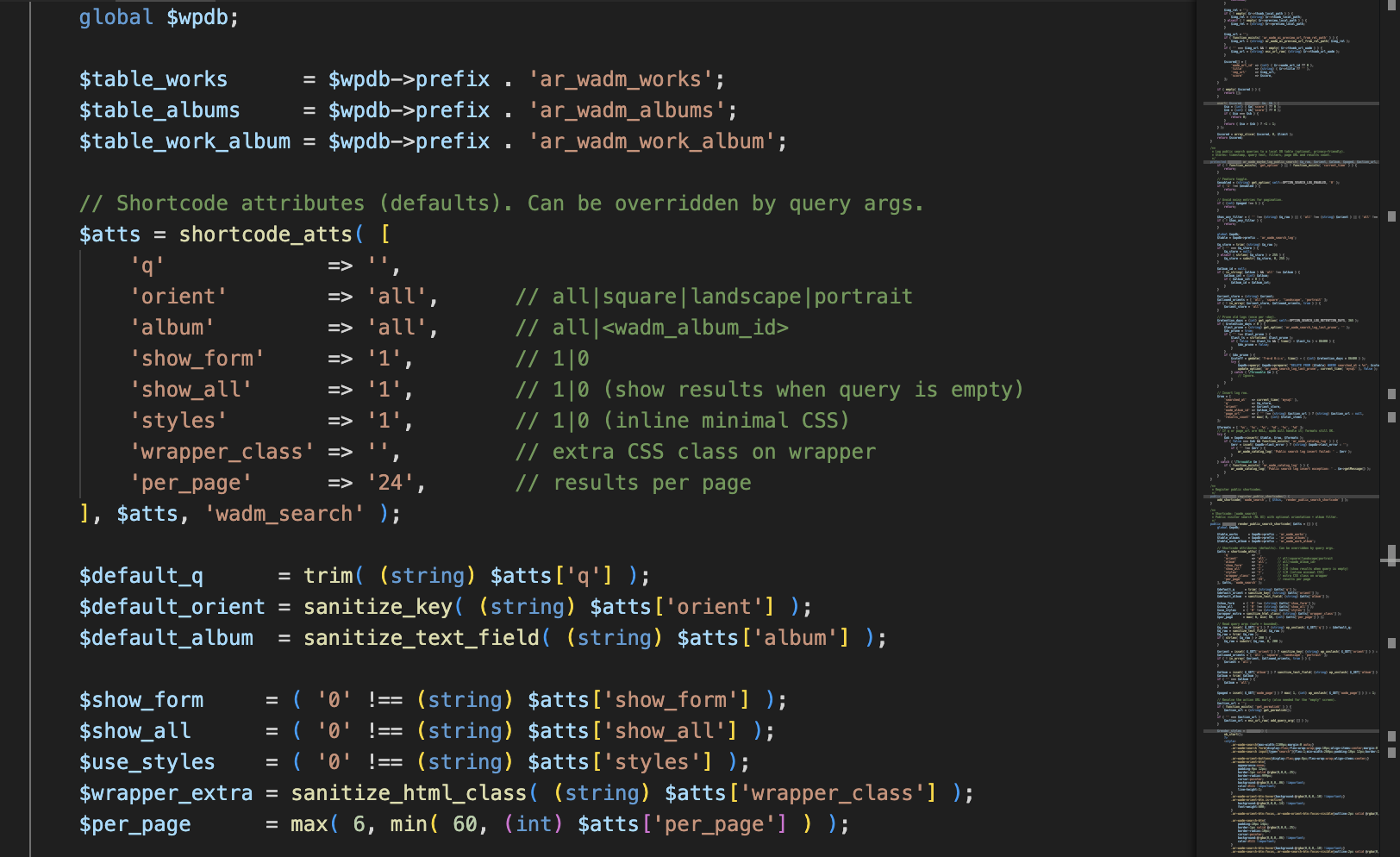
I built a private WordPress plugin that catalogs my Fine Art America artworks locally, enabling a fast public search page and a random artwork…

BACKGROUND ARTICLE
ImagineArt 1.5 promises ultra-realistic AI images, but can it actually fit into a serious artist’s workflow? In this first hands-on review I test cinematic…
Explore Next